 GenGrowth
What a Bounded Internal Link Crawl Can Prove
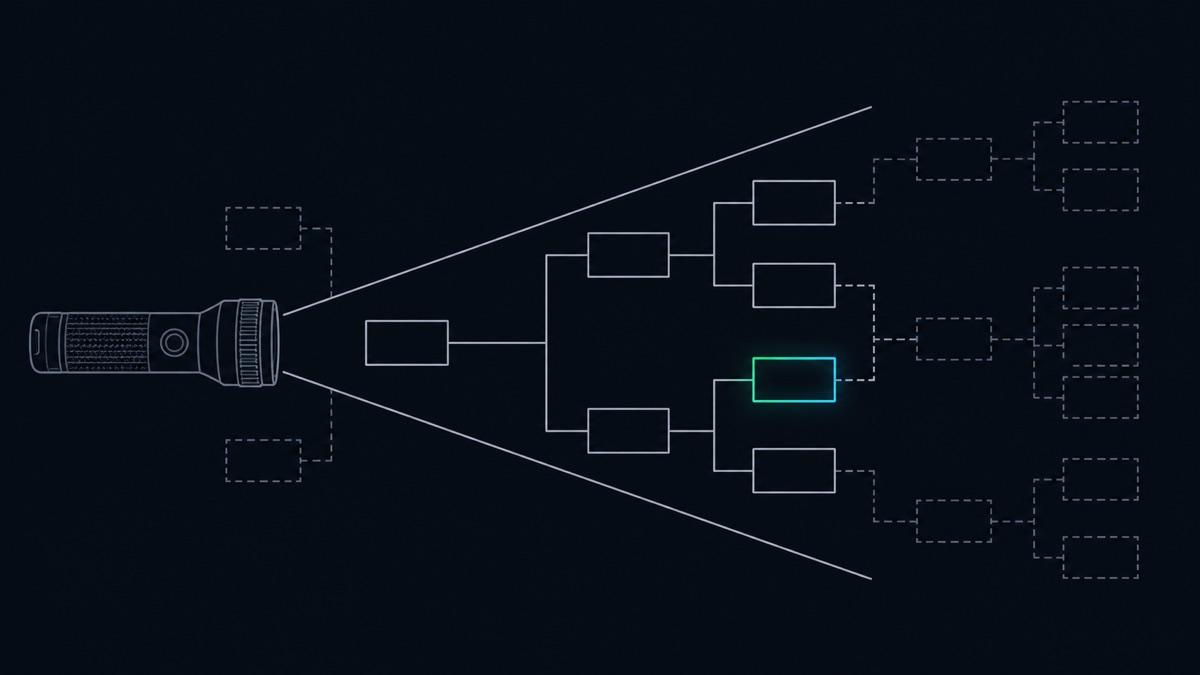
A practical way to read a public internal-link crawl: what its observed HTML paths can show, what a candidate orphan means, and what still needs human review.
An internal-link audit is useful when it narrows a structural question. It is not a substitute for a full crawler, a Search Console property, or editorial judgment. The useful question is smaller: which public HTML paths did this specific crawl observe, and where should a person investigate next?
That distinction keeps the result actionable. A public audit can collect a bounded sample of pages, their same-origin HTML links, and sitemap URLs when they are available. It can then show a relationship map instead of pretending to know the entire website.
Start with observed paths, not a promise of complete coverage
Google explains that crawlable links help it find other pages, and that anchor text helps people and Google understand a site. That is why an audit should record the actual source page, target, and anchor text it encountered, rather than only returning a count. Read Google's link best practices for the underlying crawlability requirements.
In GenGrowth's Tech Agent, the crawl reads static, same-origin HTML and has no normal-use scan quota or fixed customer-facing page allowance. Each online run still has technical processing boundaries for elapsed time, request and response volume, redirects, concurrency, and host pacing. Those boundaries protect the live service; they are not a quality score. They mean a result can say:
| Observation | What it supports | What it does not support |
|---|---|---|
| A link from page A to page B was collected | That one static HTML path existed during this request | That every version of the site links this way |
| A sitemap URL was not reached through observed links | A candidate orphan worth checking | That the URL is absent from all navigation or JavaScript-rendered UI |
| A page is four observed hops from home | The sampled graph has a long route to that page | A claim about Google's exact crawl priority or PageRank |
This makes a bounded audit particularly useful after a migration, navigation change, URL restructure, or large publishing batch. You are checking whether the paths you expect are still visible in a real, public request.
Treat “candidate orphan” as a review queue
A sitemap is a list of URLs a site owner considers important. Google notes that a sitemap can help discovery, especially on larger or more complex sites, but it does not guarantee that a URL will be crawled or indexed. It also notes that a comprehensively internally linked site can make important pages discoverable without relying on a sitemap. See Google's sitemap overview.
That gives a good operational definition for a candidate orphan in a bounded audit: a URL appears in the sitemap, but the current static-HTML crawl did not reach it through an observed internal link. It is a prompt to inspect, not an instruction to add a link.
For each candidate, use this short decision sequence:
- Should the page remain public? A duplicate, expired, or thin page may need consolidation or retirement rather than more links.
- Is the page reachable in another legitimate way? Check pagination, language variants, client-rendered navigation, and the intended template.
- Which source page gives a reader a natural reason to continue? Add a contextual link where the target answers the next question; do not add a token link simply to change a count.
- How will you verify the change? Re-run the bounded crawl and review the edited source URL, target URL, and anchor text.
Keep JavaScript and robots limits visible
A static-HTML crawl is deliberately conservative. Client-side links that appear only after JavaScript runs may not be in the collected document. Treat an unexpected finding on a heavily rendered application as a hypothesis, then verify it in the browser and in the product's own navigation.
The audit also respects robots.txt. That file tells crawlers which URLs they
may request; it is not a way to guarantee that a URL will never appear in
search. Google's robots.txt guide
explains the distinction. If a path cannot be fetched during an audit, the
right conclusion is “not inspected,” not “bad page” or “not indexed.”
Turn the report into one reviewable change
Pick a single structural finding with a clear source page and target page. Put the proposed link in context, record why the target matters, and choose a review window. The goal is not to maximize the number of links. It is to make the important paths on a site understandable for readers and observable in your own maintenance process.
Run the Tech Agent when you have a public site to inspect. A verified GenGrowth account is required, but no Search Console connection or site-ownership verification is needed. The Agent reads public static HTML, and the marketing run is intentionally not saved to an app project, so use the result as evidence for a decision—not as an automatic change list.
Put the method to work
Start with one verifiable SEO signal
The SEO Agent requires a verified account and inspects public HTML without Search Console or site-ownership access. The marketing run is not saved to an app project.
GenGrowth Team
Growth Automation Engineers
We build tools that help product teams automate growth experiments.
Related Articles
- methodologyBest Autoblogging Software — Four Billing Units, One Conversion Nobody RunsEvery list of the best autoblogging software puts headline dollar figures side by side, but this category quotes prices in four units that cannot be compared
- methodologySurfer SEO Alternatives — Surfer Sells Prompt Tracking Two Ways, and the Cheaper One Is Not the One You Are QuotingSurfer sells prompt tracking two ways: bundled into its content plans, and as a standalone AI Search Analytics product — and the standalone one is cheaper for more prompts.
- methodologyInternal Links Not Improving Rankings — What Our Own Audit Could and Could Not ProveThree of our pages showed 68 pages linking to them — the highest count on the domain, 3.8 times the next-highest page at 18.