 GenGrowth
PageRank Sculpting Still Trips Up Sites — Here's What a Link Audit Reveals
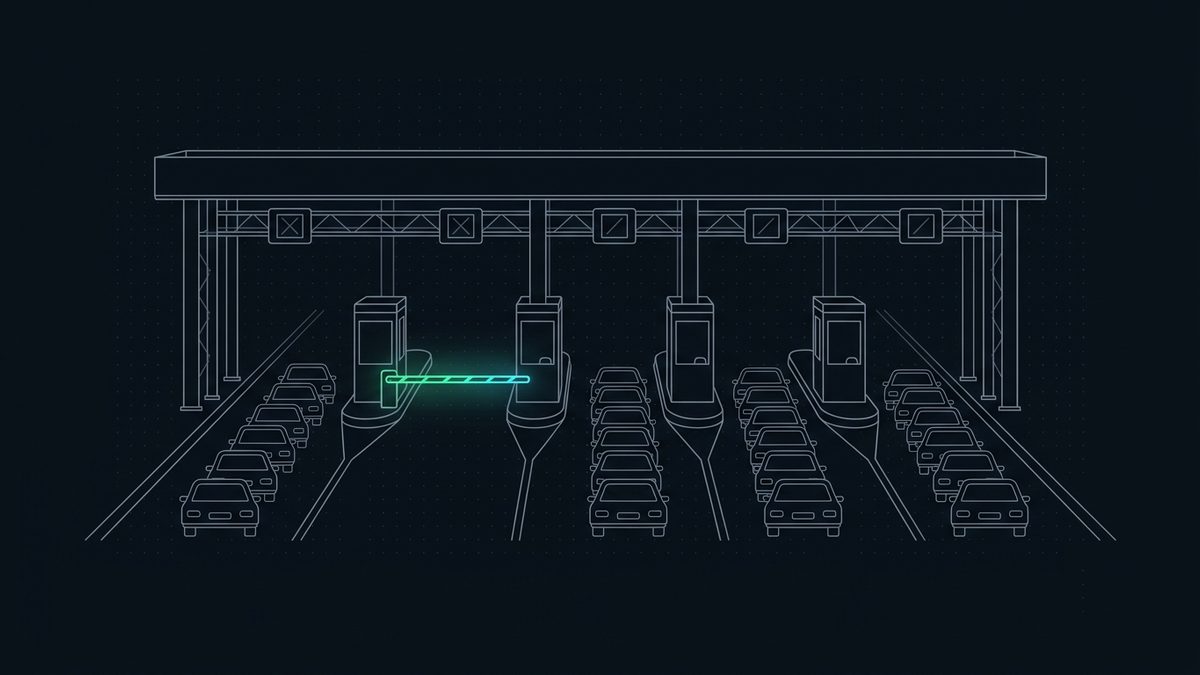
PageRank sculpting is the practice of using nofollow attributes on internal links to control which pages on a site receive link equity.
What Is PageRank Sculpting?
PageRank sculpting is the practice of using nofollow attributes on internal links to control which pages on a site receive link equity. Until Google changed the calculation — a change made in 2008 or earlier but not disclosed until June 2009 — the logic was coherent: if a page linked to ten destinations and you nofollowed two of them, the remaining eight links absorbed a proportionally larger share of that page's total equity. That made internal nofollow a plausible way to steer authority toward high-value pages and away from thin content. One caveat before the mechanics: Google's link analysis moved well beyond the classic PageRank papers years ago, and PageRank itself has not been publicly observable since toolbar PageRank was retired in 2016. "Equity" below is a working model for reasoning about internal links, not a number you can read off a dashboard.
- The equity withheld from nofollowed links redistributed to the other followed links on the same page, making the tactic function as a dial
- Google disclosed in June 2009 that the calculation had already changed: a nofollowed link still counts toward the divisor when a page's equity is split across its outlinks, so the share allotted to it is simply not passed on rather than redistributed to the page's other links
- Site owners applying nofollow to internal links today for sculpting purposes reduce the total equity the page passes without sending any of it to their preferred destinations
This sits within the broader search performance diagnosis pillar, which maps how equity, crawl behavior, and ranking signals interact across a site.
Why It Matters for Your Workflow
One update to carry forward before the mechanics: since September 2019 Google treats nofollow — alongside the newer sponsored and ugc values — as a hint rather than a directive, and as of March 1 2020 that applies to crawling and indexing too. Google says this will not change how such links are treated in most cases, so the conclusion below holds; it just means nofollow is no longer a guarantee about how a link is processed. The practical consequence of the change Google disclosed in June 2009 is that pagerank sculpting via internal nofollow is now a net loss operation. Every internal link you nofollow removes equity from the system rather than concentrating it elsewhere. Teams applying the tactic based on pre-2009 documentation are making decisions that cost more than they gain.
The more pressing workflow issues tend to be structural rather than attribute-related. In our own site audits, two conditions consistently do more damage to internal equity flow than any nofollow misconfiguration: pages with zero inbound internal links (orphans that receive no equity regardless of domain authority) and broken internal links pointing to 404s or redirected URLs (equity lost at dead endpoints). Both are fixable with a direct audit; neither is addressed by adjusting nofollow settings.
How PageRank Sculpting Plays Out in Real Site Structures
Understanding pagerank sculpting today means seeing where equity actually goes in concrete scenarios rather than in theory. Three situations surface repeatedly in site reviews:
Flat blog sites with no hub pages. A site publishing 200 articles with no category or pillar structure spreads equity in a diffuse pattern across hundreds of pages. No single article accumulates enough authority to rank well for competitive queries. Building hub pages that link to related articles achieves intentional equity concentration — which is exactly what pagerank sculpting was originally designed to do — without sacrificing any equity to evaporation.
Sites with orphaned content. An article that no other internal page links to receives zero equity from internal sources regardless of how much the domain has built externally. In one content audit we ran, 62% of published articles had no inbound internal links. Those pages were invisible to PageRank flow and frequently under-crawled as a result. The pillar guide to low hanging fruit keywords and keyword difficulty covers how crawl frequency and equity accumulation interact at different link depths.
Sites with broken internal CTAs. A link to a 404 or a permanent redirect passes no useful equity. A separate pass over that same GenGrowth site surfaced 168 internal CTA links pointing to 404 or redirected destinations. Repointing them restored a path for those links to be followed again — a structural fix, not a nofollow adjustment. Recrawling and any downstream effect take time, and there is no public metric that lets you watch equity recover directly.
Common Implementation Misreadings
Teams working from older documentation make the same four errors when they attempt PageRank sculpting:
Nofollow as an equity steering tool. After 2009, nofollow on internal links does not redirect withheld equity to other links on the same page — it disappears. Applying nofollow this way shrinks the total equity the page distributes without concentrating it anywhere.
Sitemaps as an equity source. A page in the sitemap but with no inbound internal links receives no PageRank from internal sources. Sitemap inclusion helps crawlers find a page; it passes no equity. Pagerank sculpting cannot fix an orphan page — only adding real inbound links can.
Crawl depth and equity distribution treated as unrelated. As a rule of thumb rather than something Google documents, a page buried five clicks deep tends to accumulate less internal support than one two clicks from the homepage, and is harder for both people and crawlers to reach. Reducing click depth through internal links is a more direct fix than any attribute adjustment, and it benefits crawl frequency at the same time.
Broken links treated as a secondary concern. Teams debating how to distribute equity from healthy links often leave a portion of their internal link graph pointing to 404s or permanent redirects. Auditing and fixing those broken links is the highest-leverage starting point in any internal link equity project.
PageRank Sculpting at a Glance — Quick Reference
| Scenario | Default approach | Better current approach | Decision signal |
|---|---|---|---|
| Links to thin or boilerplate pages (login, legal) | Nofollow every one of them to "preserve" equity for other destinations | Leave them followed in most cases — Google's own guidance singled out cart and login links as the rare exception where nofollow is reasonable. Where a thin page genuinely should not rank, use noindex on the page itself rather than robots.txt, which blocks crawling without reliably preventing indexing | If you would not want a user clicking the link, reconsider whether the link needs to exist at all |
| Orphaned articles with no inbound internal links | Not addressed by nofollow or sculpting | Add contextual links from related articles and hub pages using descriptive anchor text | Check crawler logs first — if the page is under-crawled, orphan status is the likely cause |
| Internal links pointing to 404s or redirects | Not addressed by sculpting | Audit and update or remove broken links before adjusting any other settings | A broken link count above zero means equity is being lost before any structural decisions matter |
| Deep content pages receiving low organic traffic | Nofollow competing links to concentrate equity upward | Reduce click depth by adding direct links from hub pages or top-level navigation | Measure actual crawl depth first; pages at depth 4+ are candidates for structural review |
How to Evaluate Your Internal Link Equity
Before any PageRank sculpting decision, assess the current state on these five dimensions:
Orphan page rate. Count pages that appear in the sitemap but have no inbound internal links. Any orphan page receives no internal equity regardless of how well the domain performs externally.
Broken internal link count. Count links pointing to 4xx responses or permanent redirects. These are direct, recoverable equity losses. Pagerank sculpting decisions should not start until this number is at zero.
Crawl depth distribution. Check how many pages sit more than three clicks from the homepage. Pages at depth 4+ are candidates for link structure review, not attribute adjustment.
Hub page presence by topic cluster. Determine whether each content cluster has a hub page that links out to its related articles. Clusters without hub pages rely on flat or accidental link patterns, which produce unpredictable equity distribution.
Anchor text specificity on internal links. Review whether internal links use descriptive anchor text. Generic anchors like "click here" or "learn more" reduce the topical signal passed alongside the equity.
How to Implement a Cleaner Internal Link Structure Step by Step
The goal is intentional equity distribution without relying on nofollow to steer anything — PageRank sculpting replaced by structure. Work through these steps in order:
Crawl the site and export all internal links along with HTTP response codes. Fix every link pointing to a 4xx or redirect destination before any other step.
Export the full list of published pages and cross-reference it against inbound link data. Flag every page with zero inbound internal links as an orphan.
For each orphaned page, identify two or three thematically close pages that could link to it naturally. Add contextual links using descriptive anchor text from those pages.
Audit click depth across the site. For pages sitting more than three clicks from the homepage, determine whether a hub or index page could link to them directly.
Build or strengthen hub pages for each content cluster. As a working heuristic rather than a documented threshold, a hub page linking to roughly 10–20 related articles becomes a distribution node for that cluster's equity — achieving what pagerank sculpting was trying to accomplish, in a way that works with how Google currently handles links rather than against it.
Re-crawl after each round of changes. Compare orphan page counts and monitor crawl frequency on previously under-linked pages to confirm the changes are taking effect.
Common Questions About PageRank Sculpting
The questions below come up in almost every audit where PageRank sculpting is still on the table.
Does adding nofollow to internal links help concentrate equity on important pages?
No. Since the change Google disclosed in June 2009, a nofollowed internal link still counts toward the divisor when the page's equity is split, so the share allotted to it is simply not passed on rather than redistributed to the page's other links. Using nofollow this way reduces the total equity the page distributes without benefiting any other destination.
Can orphaned pages be fixed by submitting them via Google Search Console's URL inspection tool?
Submitting a URL can request recrawling, but it does not create equity flow. Equity flows through followed links. An orphaned page needs at least one inbound internal link from a crawled page to receive any PageRank from internal sources.
How many internal links should a hub page carry?
There is no universal number, but a hub page with 10–20 contextual links to related content is typical in well-structured topic clusters. Adding links well beyond that threshold on a single page dilutes the equity passed per link, so large topic clusters tend to work better with nested hub pages rather than one page linking to everything.
Does Google's current documentation still address this tactic?
Google Search Central now documents three link attributes — sponsored for paid placements, ugc for user-generated content, and nofollow for cases where neither applies — none of them framed as an internal equity control. The change was disclosed by Matt Cutts at SMX Advanced in June 2009 and written up the same week on his personal blog, mattcutts.com; it has not been reversed. Current guidance focuses on clear site structure and useful content rather than attribute-based equity steering.
Related Reading
- broken link and technical SEO audit checklist — step-by-step process for auditing, categorizing, and fixing broken internal and external links across large content archives, with prioritization criteria
- what a bounded internal link crawl can prove — detailed process for mapping the full internal link graph, identifying structural gaps, and prioritizing fixes by equity impact
- how to read zero search volume keywords — for deciding which pages are worth the link equity in the first place
Take Action
Run the Tech Agent on your site. A verified GenGrowth account is required, but no Search Console connection or site-ownership verification is needed. One crawl of public static HTML returns observed crawl, indexability, and internal-link conditions, including candidate orphan pages and collected error targets. The marketing run is not saved to an app project. A single run covers roughly 950 pages within a four-minute boundary, and a larger site comes back marked partial coverage. It will not classify an uncollected link as broken, and it is not a PageRank calculation. What it gives you is an observed link graph to reason from instead of assumptions.
The link-structure half needs a crawl, but the "what is underperforming" half starts from search data — find your SEO opportunities in Search Console. It reads queries rather than pages, so grouping those queries onto the pages you would point links at stays a manual step.
Sources
- Google Search Central — the reference for the current sponsored / ugc / nofollow link attributes, and for the September 2019 announcement that moved them to a hint model
- Matt Cutts, "PageRank sculpting," mattcutts.com, June 15 2009 — primary source for the change in how equity is divided across outlinks, first disclosed at SMX Advanced 2009 and reported contemporaneously by Search Engine Land
- Google: qualify your outbound links (Search Central)
Put the method to work
Start with one verifiable SEO signal
The SEO Agent requires a verified account and inspects public HTML without Search Console or site-ownership access. The marketing run is not saved to an app project.
GenGrowth Team
Growth Automation Engineers
We build tools that help product teams automate growth experiments.
Related Articles
- methodologyBest Autoblogging Software — Four Billing Units, One Conversion Nobody RunsEvery list of the best autoblogging software puts headline dollar figures side by side, but this category quotes prices in four units that cannot be compared
- methodologySurfer SEO Alternatives — Surfer Sells Prompt Tracking Two Ways, and the Cheaper One Is Not the One You Are QuotingSurfer sells prompt tracking two ways: bundled into its content plans, and as a standalone AI Search Analytics product — and the standalone one is cheaper for more prompts.
- methodologyInternal Links Not Improving Rankings — What Our Own Audit Could and Could Not ProveThree of our pages showed 68 pages linking to them — the highest count on the domain, 3.8 times the next-highest page at 18.